That reality creates real friction for growing SaaS companies. Sales cycles stretch across months, multiple stakeholders weigh in, and technical products rarely fit neatly into simple keywords. Meanwhile, paid acquisition costs keep climbing.
This guide covers what makes B2B SaaS SEO different from other forms of SEO, a step-by-step strategy for 2026, the AI-search trends reshaping visibility, and the execution gap that determines whether a strategy actually becomes ranking, revenue-generating pages.
Key Takeaways
- SaaS SEO success is measured in qualified pipeline and sign-ups, not traffic
- Buyers complete over half their research before ever contacting a vendor
- Winning content strategies map to every funnel stage and target AI Overviews
- Execution speed, not just strategy, now separates ranking winners from laggards
- Meaningful results take months, but near-page-one pages can improve faster
What Is B2B SaaS SEO?
B2B SaaS SEO means optimizing a software company's website, content, and technical infrastructure to attract organic traffic from prospects actively researching business solutions, then guiding them toward a demo, trial, or purchase. It's a discipline built around long consideration cycles, technical buyers, and recurring revenue rather than a generic SEO playbook applied to software.
B2B SaaS SEO vs. B2C SaaS SEO
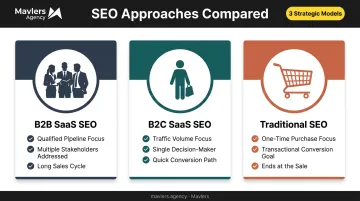
B2C SaaS SEO chases traffic volume. More visitors, more potential subscribers. B2B SaaS SEO cares far less about raw visitor counts and far more about qualified leads and sales-ready pipeline.
The content itself differs too: B2C content typically speaks to a single consumer decision-maker, while B2B content must address an entire buying committee, including end users and the executives who ultimately sign off, often within the same piece.
A feature page written only for end users misses the finance director who signs off on the contract.
B2B SaaS SEO vs. Traditional SEO
Traditional SEO for a one-time-purchase business stops mattering once the sale closes. SaaS doesn't work that way. The recurring revenue model extends SEO's job into onboarding, retention, and churn reduction, since a customer who churns after three months is a lost asset, not a completed transaction.
B2B SaaS sales cycles also run considerably longer than typical retail purchases, often three to nine months or more depending on contract size and the number of stakeholders involved. That length demands content traditional SEO rarely needs:
- Comparison and alternatives pages
- Customer case studies with measurable outcomes
- ROI-focused calculators and one-pagers
Without these nurturing assets, organic traffic arrives and leaves without ever entering the pipeline.
Why B2B SaaS SEO Matters in 2026
Search remains the starting point for most B2B research. A Think with Google study found 71% of B2B researchers began with a generic search, not a branded one, before narrowing down to specific vendors. If your SaaS product doesn't show up for those early, unbranded searches, competitors capture that attention instead.
Cost is the other half of the argument. First Page Sage's analysis of B2B SaaS client data estimates organic acquisition costs around $205 per customer, compared to $341 for inorganic acquisition through paid and outbound channels. That's directional agency data rather than a universal benchmark, but the gap tracks with what most SaaS marketers already sense: paid channels get more expensive every quarter, while organic compounds.
Resilience matters too. Ad platforms change their algorithms and pricing on their own schedule. Social platforms can throttle organic reach overnight. A strong organic search presence gives SaaS companies a growth channel that doesn't disappear because a platform changed its policy.
The Complete B2B SaaS SEO Strategy for 2026
A modern B2B SaaS SEO strategy has to connect keyword research, content, technical health, and link building directly to pipeline metrics like LTV:CAC. Rankings alone don't pay the bills. Demos and sign-ups do.
Map the Buyer Journey and Build a Keyword Strategy
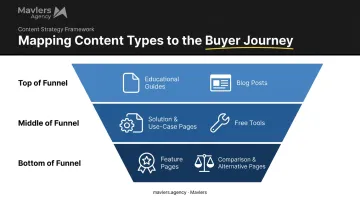
Buyer intent shifts as prospects move closer to a decision. A typical path looks like this:
- Top of funnel: "How to reduce customer churn" (broad, problem-based)
- Middle of funnel: "Best customer success software" (category comparison)
- Bottom of funnel: "[Competitor] alternatives" (ready to switch)
Start by brainstorming seed keywords from your core product features, then expand that list with a keyword research tool and a competitor gap analysis. Organize everything by funnel stage.
Prioritize the bottom-of-funnel, high-intent keywords for landing and comparison pages first. These convert fastest. Save broader informational keywords for blog content that builds awareness over time.
Create Content That Converts at Every Stage
Every B2B SaaS site needs several distinct content types working together:
- Feature pages that explain specific product capabilities
- Solution or use-case pages targeted at specific industries or roles
- Comparison and alternative pages for bottom-funnel searchers
- Top-of-funnel educational content like guides and blog posts
- Free tools or templates that generate organic traffic and leads
Comparison pages deserve special attention. They target searchers who are actively evaluating options, and they should include direct, structured comparisons against named competitors, meaning specific feature-by-feature tables, not vague claims of superiority.
Build an editorial calendar that assigns a target keyword, an audience, and a call-to-action to every single piece of content. Without that structure, production drifts away from the funnel strategy and pages get published with no clear conversion path.
Strengthen Technical SEO and Execution Speed
Even great content and keyword targeting fail if the technical foundation is weak. Critical factors for SaaS sites include:
- Page speed and Core Web Vitals
- Mobile-friendliness
- HTTPS across the entire site
- XML sitemaps
- Schema markup
- Canonical tags to prevent duplicate content issues
Most SaaS and agency marketing teams underestimate one part of this process: identifying a fix is far easier than shipping it. Marketing teams routinely flag which technical issues need fixing and which new pages need building.
Those recommendations often sit in a developer backlog for months, because in-house engineering bandwidth is committed elsewhere. Rankings stall simply because nobody built the page.
This execution gap is why agencies managing multiple B2B SaaS clients partner with white-label development teams. Mavlers Agency, for instance, builds and maintains pages across WordPress, Shopify, Webflow, and HubSpot behind the scenes, operating entirely under the agency's own brand.
That partnership means SEO recommendations turn into live, optimized pages faster, without the agency needing to hire another developer.
Build Authority Through Strategic Link Building
Backlinks still signal trust to search engines, but B2B SaaS link building needs a different playbook than consumer sites. Effective tactics include:
- Guest posting on relevant industry blogs and publications
- Broken-link building, replacing dead links with your resource
- Digital PR around original data or proprietary research reports
- Reclaiming unlinked brand mentions across the web
Quality outweighs quantity every time. A single link from a respected industry publication typically moves the needle more than dozens of low-relevance directory links. Track referring domains and anchor-text distribution over time using a backlink monitoring tool, and watch for unnatural patterns that could flag manual review.
Google explicitly treats bought links, excessive link exchanges, and automated link schemes as spam violations that can cause demotion or removal from search results entirely (Google Search Central). Shortcuts aren't worth the risk.
2026 Trends Shaping B2B SaaS SEO
Search itself is changing shape, and B2B SaaS marketers need to adjust for it.
Generative Engine Optimization (GEO)
Generative Engine Optimization (GEO) is the practice of structuring content with clear, direct answers to specific buyer questions so it gets cited in AI Overviews, ChatGPT, and other LLM-powered answers. This isn't the same as classic ranking.
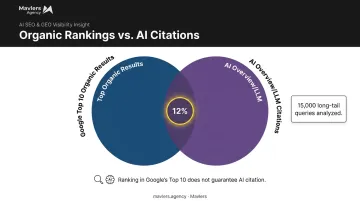
Ahrefs found only 12% average overlap between URLs cited by AI assistants and Google's own top 10 results across 15,000 long-tail queries. A page can rank well organically and still miss AI citations, or vice versa. Track AI visibility as its own metric, separate from traditional rank tracking, using dedicated tools such as Mavlers Agency' GEO Visibility Index (GVI).
Product-Led SEO
Product-led SEO is gaining traction too. Free tools, calculators, or templates tied to your core product can rank in search and generate sign-ups without a hard sales pitch—a free ROI calculator, for instance, tends to attract the audience already inclined to try the product.
E-E-A-T and Content Freshness
E-E-A-T and content freshness are becoming stronger quality signals. Google added Experience to its quality framework in 2022 and treats Trust as the most important element (Google Search Central). Simply updating a publish date without substantially improving the content doesn't help—older SaaS content needs genuine, regular updates, not cosmetic refreshes.
Common B2B SaaS SEO Mistakes to Avoid
Even well-funded SaaS SEO programs stumble on the same handful of mistakes.
Chasing only high-volume head terms: long-tail queries make up roughly 91.8% of all Google searches and typically convert better with less competition (Search Engine Land). Ignoring them in favor of broad, competitive head terms wastes months of effort chasing rankings that may never arrive.
Skipping scheduled technical audits: rankings can erode from crawl errors, broken redirects, or slow-loading pages, issues that content improvements alone can't fix. Quarterly technical audits catch these before they become traffic drops.
Relying on weak link-building shortcuts: paid link schemes and automated link networks rarely move rankings and carry real penalty risk. Build relationships and earn links instead of buying them.
Frequently Asked Questions
How long does it take to see results from B2B SaaS SEO?
Most SaaS companies see meaningful movement within several months, with Google's own guidance suggesting four months to a year for significant benefit. Early wins are possible by refreshing existing pages already ranking in positions 10-30.
What's the difference between B2B SaaS SEO and traditional SEO?
B2B SaaS SEO accounts for longer sales cycles, multiple buying-committee stakeholders, and a shift from one-time conversions to retention-focused content that supports the entire customer lifecycle.
How much should a B2B SaaS company budget for SEO in 2026?
Most B2B SaaS companies budget $5,000 to $20,000 per month, depending on competition level, content production needs, and link-building scope. Many reinvest savings from lower organic CAC directly into continued SEO growth.
What are the best tools for B2B SaaS SEO?
Group your toolkit into three categories: keyword and competitor research platforms, technical audit crawlers, and rank tracking or analytics tools. Most SaaS teams use at least one tool from each category.
Should B2B SaaS companies outsource SEO execution to an agency or partner?
Many teams keep strategy and keyword decisions in-house but partner with specialized execution partners for content production or technical SEO implementation to move faster without expanding headcount.
How does AI search (GEO) affect B2B SaaS SEO in 2026?
Clear, well-structured content that directly answers buyer questions increases the odds of being cited in AI Overviews and chat-based answers, alongside traditional organic rankings. Both now require deliberate optimization.