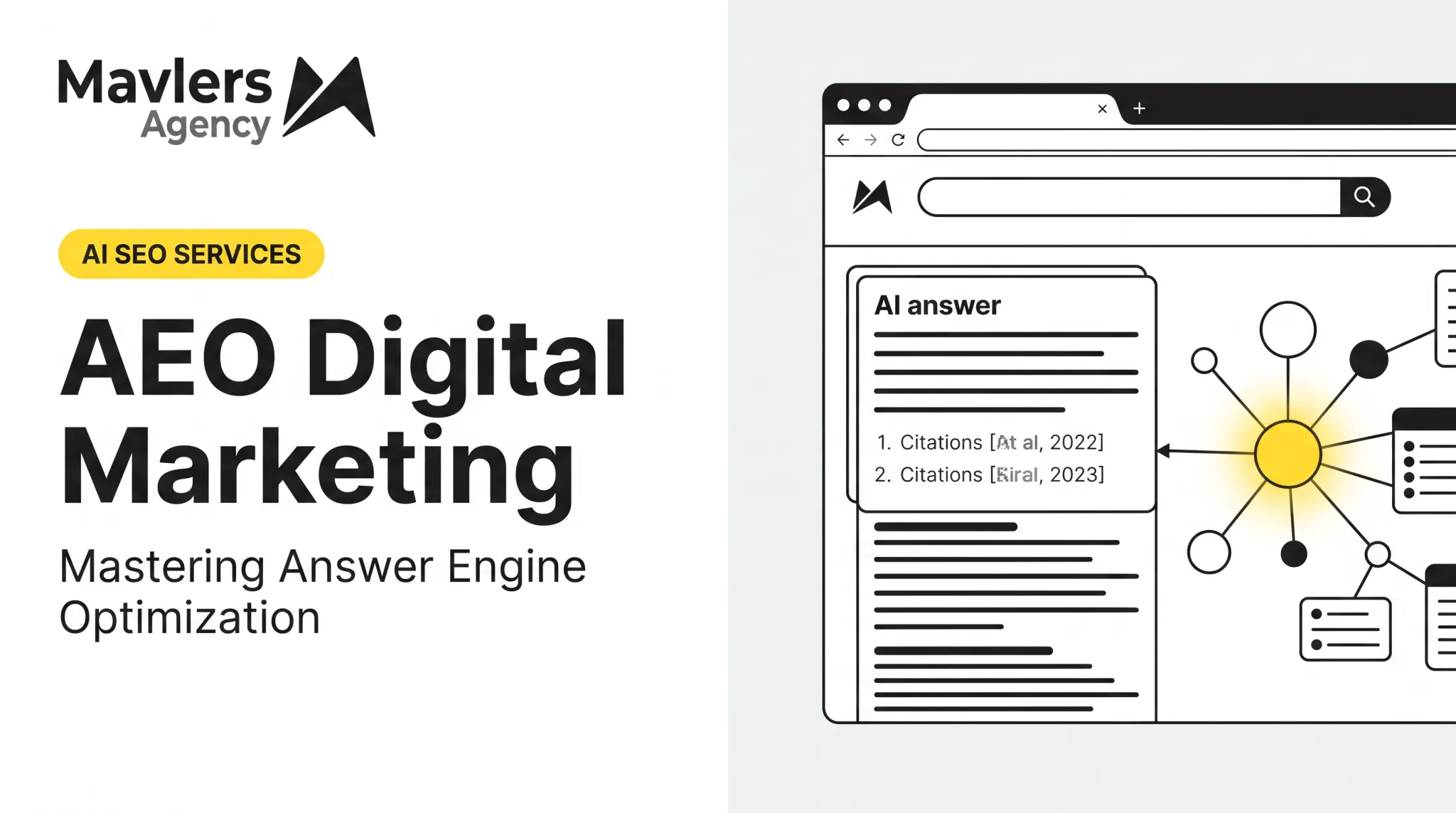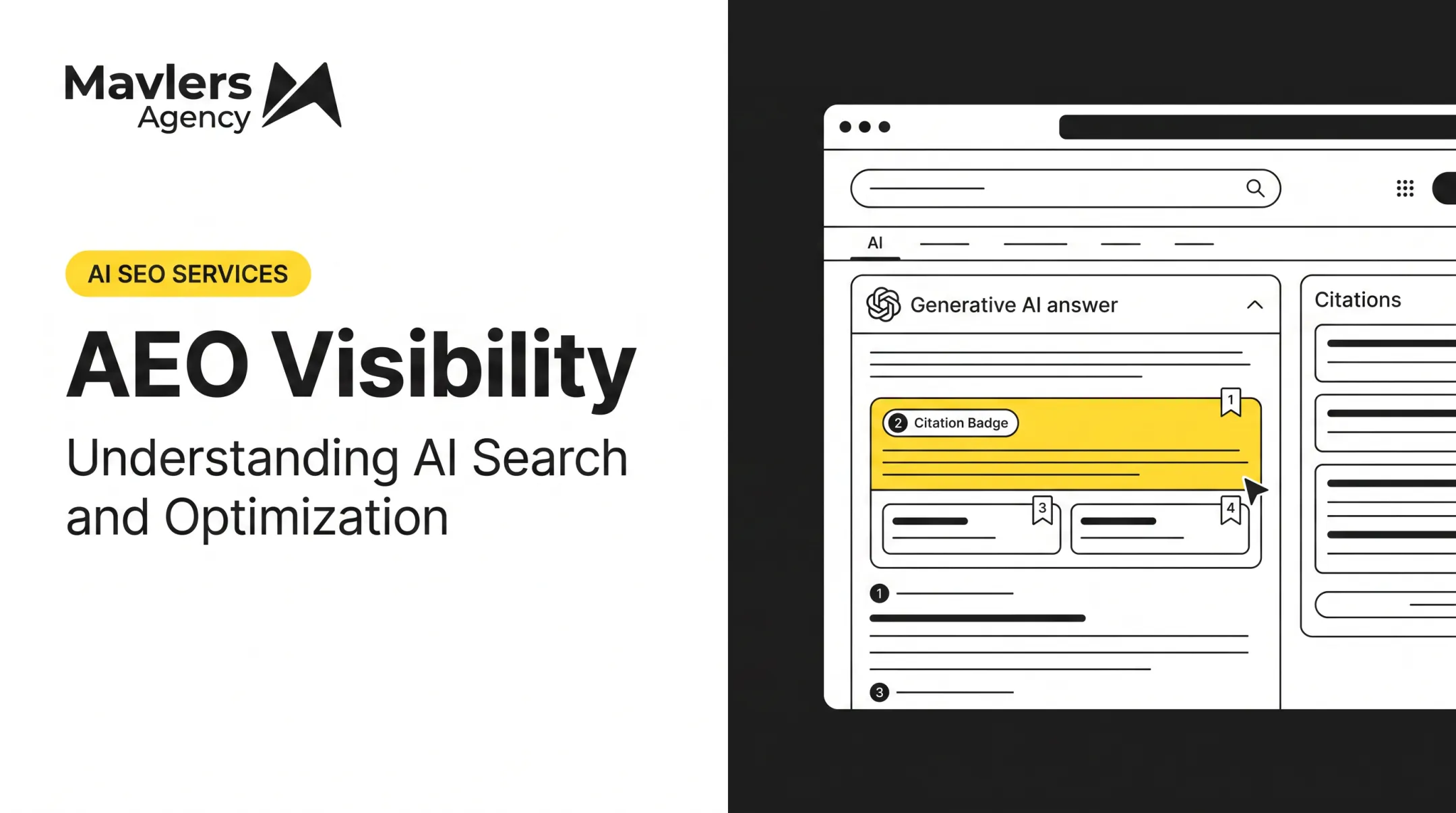

This isn't a minor shift. Half of B2B software buyers now start their research in an AI chatbot instead of Google Search, according to G2's 2025 survey of over 1,000 decision-makers — a 71% jump from just four months earlier. That changes where marketing budget, content, and measurement need to go.
This article breaks down what AEO and SEO actually do differently, where each fits in your funnel, and how to decide where to invest first.
TL;DR
- AEO gets your brand cited inside AI-generated answers; SEO gets you ranked in search results
- Initial citations can appear in weeks with AEO; SEO builds compounding traffic over months to years
- Most B2B programs need both — split budget based on your current visibility baseline
- A technically sound website is the shared foundation both strategies depend on
AEO vs SEO: Quick Comparison
| Factor | SEO | AEO |
|---|---|---|
| Primary Goal | Rank in search results, drive clicks | Get cited inside AI-generated answers |
| Core Tactics | Keywords, backlinks, technical SEO, topic clusters | Structured data, Q&A formatting, off-site authority (Reddit, review sites) |
| Time to Results | 4-12 months for competitive impact (Semrush) | Weeks for first citations, though no fixed benchmark exists |
| Measurement | Rankings, clicks, dwell time | Citation rate, share of answers, branded search lift |
| Lead Gen Role | Captures bottom-funnel, high-intent traffic | Builds awareness during AI-assisted shortlisting |
What Is SEO for B2B Lead Generation?
SEO is the practice of ranking your website in traditional search results so buyers find you when they search directly. It remains foundational because it still captures most active B2B research behavior.
Web search was among the top two research resources for 66% of B2B buyers in Demand Gen Report's 2024 B2B Buyer's Survey. Vendor websites followed close behind at 45%. Organic search still feeds a large share of B2B pipeline.
AI engines still pull answers from indexed, well-structured websites. If your site has weak technical SEO — slow load times, poor schema, messy site architecture — you're handicapping your AEO potential too. SEO infrastructure isn't optional even if your priority is AI visibility.
Use Cases of SEO in B2B Lead Gen
SEO dominates at the bottom of the funnel, where buyers already know what they want:
- Transactional queries: "pricing for [software category]"
- Comparison searches: "[Product A] vs [Product B]"
- Local B2B services, where geographic relevance drives rankings
- Mature software categories with long search-demand history
Gartner found that 61% of B2B buyers prefer a rep-free buying experience, conducting independent research through digital channels before ever talking to sales. Well-optimized product and pricing pages capture that self-service intent directly.

What Is AEO for B2B Lead Generation?
AEO — Answer Engine Optimization — is about getting your brand mentioned or cited when someone asks an AI tool a question. Instead of optimizing for a blue link, you're optimizing for a sentence inside ChatGPT's or Perplexity's response.
This matters because buyers are increasingly using AI before they build a shortlist, not after. Nearly one in three buyers said they're more likely to consider vendors that show up through GenAI or agentic AI research, per Demand Gen Report's 2025 findings. If you're not in the answer, you're not on the list.
AEO leans heavily on structured, current content: FAQ schema, HowTo markup, direct answers formatted for extraction, and consistent entity signals across the web (review sites, forums, third-party mentions).
Use Cases of AEO in B2B Lead Gen
AEO has the most impact at the top of the funnel, during early exploration:
- "Best [tool category] for [use case]" recommendation queries
- Category and vendor questions asked before a shortlist exists
- Technical comparisons where buyers start in chatbots instead of search
Technology buyers show this behavior sharply: 80% use GenAI at least as much as search for vendor research, and 56% cite chatbots as a top vendor-discovery source, more than double the rate in other industries. If you sell into technical categories, AEO isn't optional anymore.

AEO vs SEO: Which Is Better for B2B Lead Generation?
There's no universal winner. The right call depends on four factors:
- Buyer research behavior — Do your prospects lean AI-first or search-first?
- Current SEO visibility — Are you already ranking well, or starting from zero?
- Category maturity in AI search — Technical/SaaS categories see heavier AI research than niche local services
- Budget constraints — What can you actually fund right now?
Situational guidance:
- Prioritize AEO if you're launching fresh or targeting technical, AI-savvy buyers who research through chatbots first
- Prioritize SEO if you're defending established rankings or targeting transactional, localized queries
Search Engine Land put it plainly: AEO is incremental to good SEO, not a replacement. Teams with strong search-visibility experience are already positioned to earn AI visibility, because the same technical foundation feeds both.
A fast, well-structured, properly schema-marked website is the shared prerequisite for both strategies. Agencies running this work for multiple B2B clients often lean on white-label partners like Mavlers Agency for technical SEO and AEO execution, so they can scale both search rankings and AI citations without adding headcount.
Decision cue: Before allocating budget, audit where you currently stand. Check your search rankings and your AI citation rate. You can't split budget intelligently without knowing your baseline on both sides.
Real-World Example
Medius, a global spend-management and accounts-payable-automation company, needed higher-quality, ICP-aligned leads in a competitive category. The real gap was attracting the right leads and proving which SEO efforts actually converted—not general visibility.
What changed:
- Shifted toward lower-funnel keywords shaped by persona research
- Optimized solution pages and glossary content
- Strengthened internal linking and built localized regional pages
- Tightened marketing-automation attribution to track which content produced qualified leads
Results, per Marcel Digital's case study:
- Search-driven leads up 61% year-over-year
- Organic traffic from target markets up 21.4%
- Conversion-focused page traffic up 25.73%
- 50 new first-page keyword rankings, including 28 in the top three

Takeaway: This was a bottom-funnel SEO win, not an AEO experiment. It shows that defending and refining traditional search visibility still moves real pipeline. If your buyers are transactional and comparison-driven, don't abandon SEO to chase AI citations that haven't proven to matter for your category yet.
White-Labeling AEO and SEO for B2B Clients
For agencies, the AEO-versus-SEO question quickly turns into a staffing question. Running both channels well across a B2B roster means schema specialists, technical SEO, prompt tracking, and content production — a hiring plan most agencies can't justify before the third or fourth client signs.
White-labeling lets the agency sell the full answer now and build delivery capacity on demand.
What's practical to white-label for B2B accounts:
- Dual baselines: organic rankings for bottom-funnel comparison terms, plus AI citation coverage across the prompts buyers actually type
- Technical foundation work both channels depend on — indexation, render, Core Web Vitals, JSON-LD
- Answer-first rewrites of comparison, pricing, and integration pages, where B2B AI citations concentrate
- Attribution plumbing: GA4 AI-referral segments wired back to the client's CRM so pipeline, not impressions, gets reported
Packaging advice. Sell one "AI + organic search" retainer rather than two line items. B2B buyers don't care which discipline produced the lead, and a single blended scope avoids the awkward conversation about why AEO reporting looks nothing like the SEO dashboard.
Partners such as Mavlers Agency deliver this as white-label AEO and GEO execution — under NDA, in the agency's branding, with no direct contact with the end client.
Conclusion
Neither AEO nor SEO wins outright for B2B lead generation. The right mix depends entirely on how your buyers research and where your visibility currently stands.
Technical, AI-savvy audiences reward early AEO investment. Transactional, comparison-driven buyers still convert through solid organic rankings.
The practical move is to connect the decision to outcomes you care about: faster AI-driven awareness during early research, or durable search traffic that compounds and converts for years.
Prioritize the gap that hurts most:
- Audit both channels against your current baseline
- Identify which gap is costing you the most pipeline
- Fund that channel first, then expand the mix
Frequently Asked Questions
Is AEO better than SEO for B2B lead generation?
AEO often wins for AI-first buyer segments and delivers faster early visibility. SEO remains essential for bottom-funnel, transactional lead capture. Most programs need both working together.
Is SEO worth it for B2B lead generation?
Yes. SEO still drives the majority of B2B research traffic and underpins the content infrastructure AI engines rely on to generate citations in the first place.
Is SEO part of B2B lead generation?
Absolutely. SEO directly captures high-intent search traffic from buyers actively searching for solutions and converts that traffic into demo requests and form fills.
What is the difference between AEO and SEO?
SEO aims for click-based rankings in search results. AEO aims for citation-based mentions inside AI-generated answers. Both require strong technical and content foundations.
How fast do AEO and SEO each produce lead gen results?
SEO typically takes 4-12 months for competitive impact. AEO can show first citations within weeks, though no universal benchmark exists yet for consistent citation timing.
Do B2B brands need both AEO and SEO?
Most brands benefit from an integrated approach. SEO infrastructure feeds AEO citation potential, so splitting them into separate budgets usually backfires.