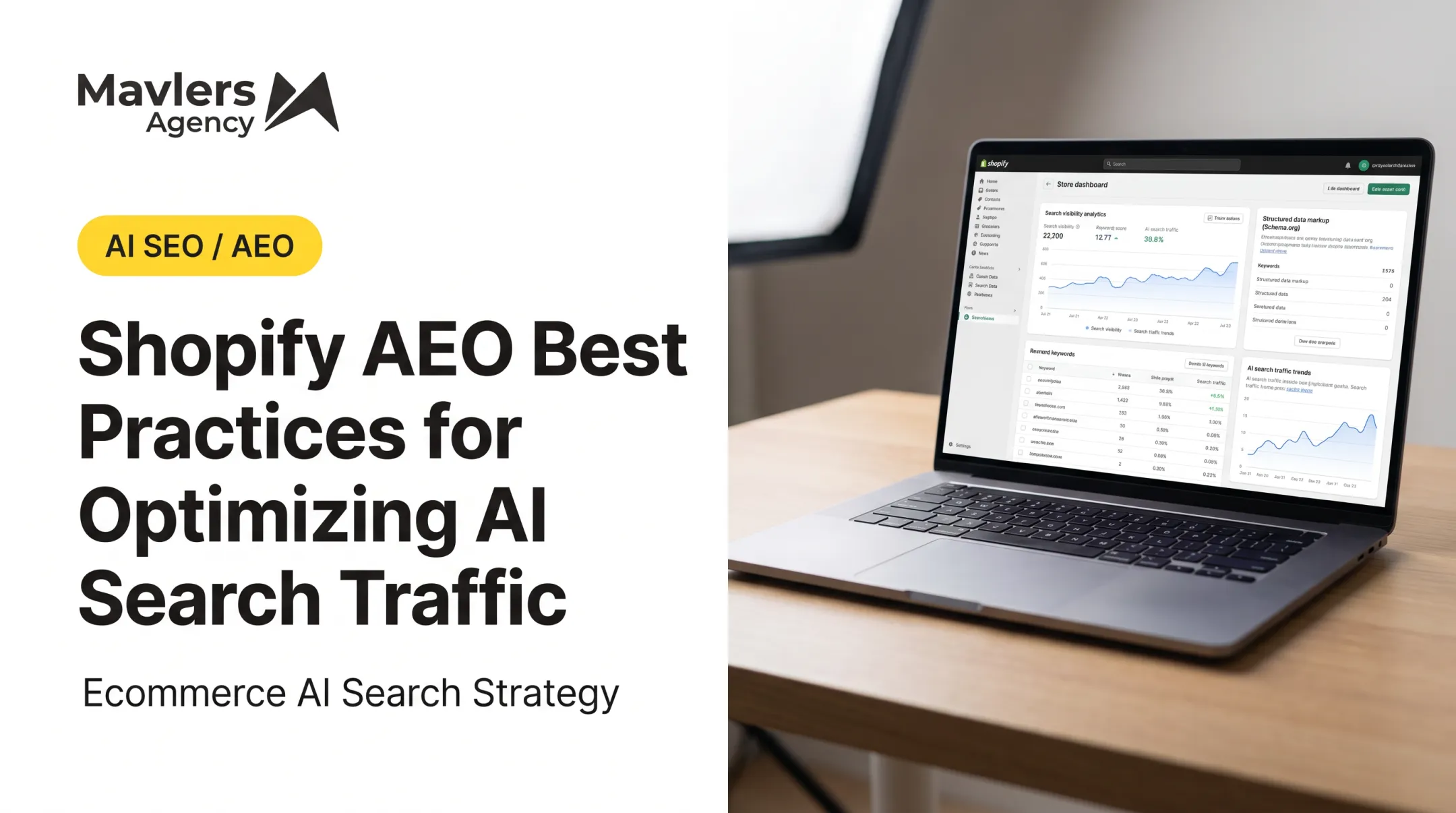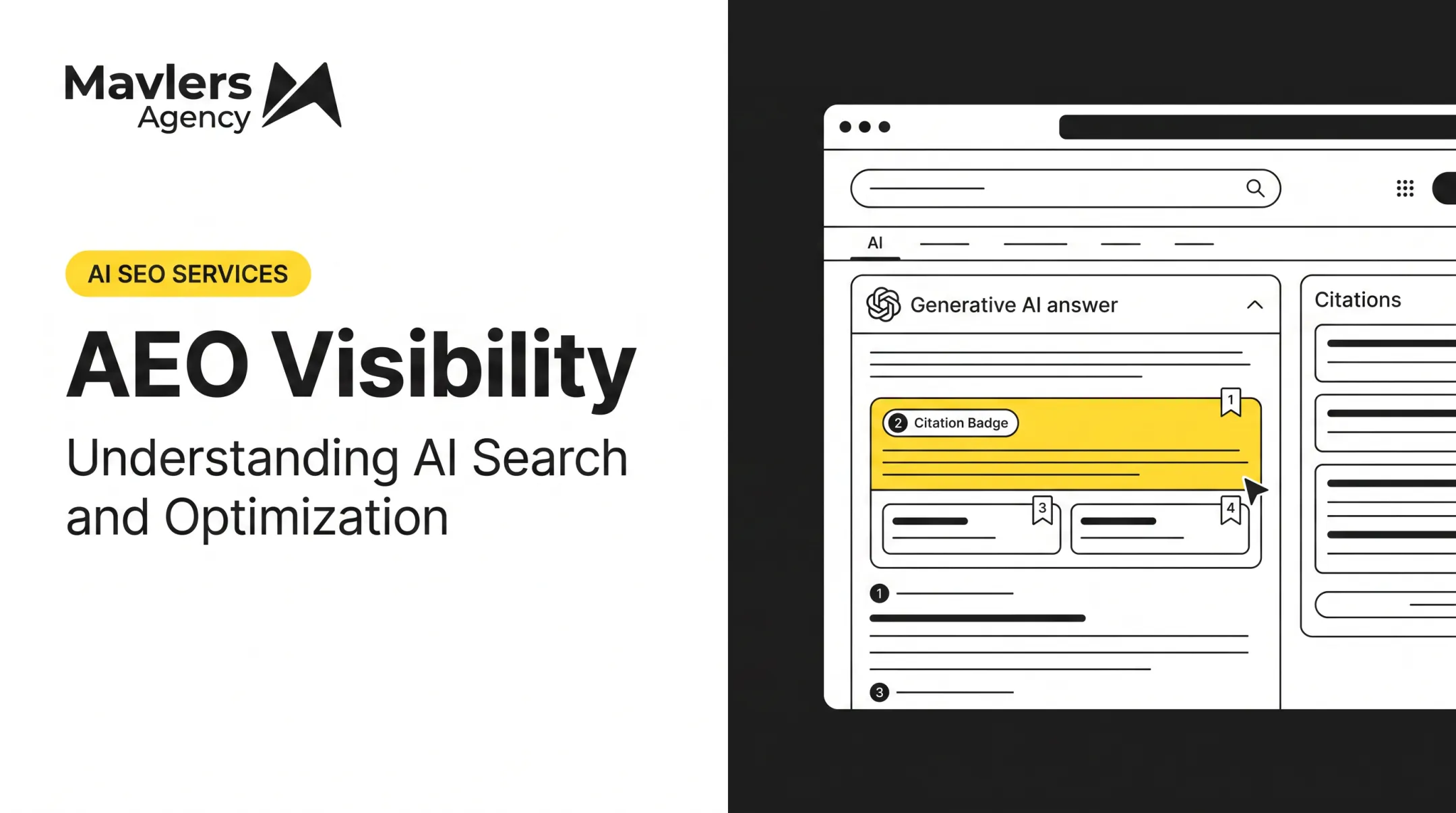

Many ecommerce brands still treat SEO as their only visibility lever. That's no longer enough. Generative Engine Optimization (GEO) — the practice of getting your products cited inside AI answers — is now a parallel requirement, not an optional add-on.
This post covers what GEO actually means, the best practices that move the needle, the tools worth using in 2026, and how agencies and brands can execute all of it without hiring a new technical team.
Key Takeaways
- GEO gets products cited inside AI answers (ChatGPT, Gemini, Perplexity), not just ranked on a results page
- Structured data, factual clarity, and answer-first content are the core levers for AI citation
- SEO, GEO, and AEO together outperform any single-channel approach
- Dedicated tools and technical delivery partners let brands execute GEO without adding headcount
What Is GEO and Why It Matters for Ecommerce
GEO stands for Generative Engine Optimization: structuring product content and data so large language models can discover, compare, and recommend your products. It is easy to confuse with "geo-targeting," but the two are unrelated. GEO has nothing to do with location. It is about how AI models parse and cite your commerce content.
Why Ecommerce Brands Can't Ignore GEO in 2026
The traffic shift is real, and it's happening fast. Pew Research Center's analysis of 900 US adults found that when an AI summary appeared, users clicked a traditional result only 8% of the time, versus 15% without one.
That's the risk side. Here's the opportunity side:
- Adobe (July 2025): AI-referred traffic was 23% less likely to convert than non-AI traffic, though the gap is narrowing month over month
- Similarweb: ChatGPT referrals converted at 11.4% versus 5.3% for organic search, pointing to strong purchase intent
Those intent signals raise the stakes on visibility itself. Being cited by an AI assistant during product research is starting to function like ranking #1 on Google once did.

If a shopper asks ChatGPT "what's the best waterproof hiking boot under $150" and your brand is missing from the answer, you lose that shopper before they ever hit a results page.
Most product pages are still built for human skimming and keyword density. AI models need factual, structured clarity before they will cite a product with confidence. Across thousands of ecommerce accounts, that gap remains the norm rather than the exception.
GEO vs SEO vs AEO: Understanding the Differences
These three acronyms get thrown around interchangeably, but they solve different problems:
- SEO — optimizes for rankings and clicks. Google's Starter Guide frames it as helping engines understand your content and users decide whether to visit.
- GEO — optimizes content and data structure so generative engines cite and recommend your products within their answers.
- AEO (Answer Engine Optimization) — targets being the direct answer or featured snippet itself.
None of these compete for the same budget line. They stack.
| SEO | GEO | AEO | |
|---|---|---|---|
| Primary goal | Rankings and clicks | Citations inside AI answers | Direct answers / snippets |
| Success metric | Rank, organic traffic | Citation share, AI referrals | Snippet ownership, PAA presence |
| Core levers | Technical health, links, keywords | Entity signals, structured data, quotable facts | Concise Q&A blocks, answer-ready schema |
What is GEO vs SEO?
A page can rank on page one and still never show up in a ChatGPT or Perplexity answer — the requirements aren't identical. SEO leans on crawlability, backlinks, and keyword relevance. GEO leans on entity clarity, quotable product facts, and structured data models can extract and attribute. AEO sits closer to SERP real estate: featured snippets, People Also Ask, and voice answers. Build one content foundation; measure each layer on its own terms.
Best Practices for GEO in Ecommerce (2026)
Lead With Answers, Not Marketing Copy
AI models extract facts, not flourishes. Compare these two approaches:
Before: "Our premium, eco-conscious hiking boots deliver unmatched comfort and durability for every adventure."
After: "Waterproof hiking boot. Weight: 1.2 lbs per boot. Waterproof rating: IPX7. Price: $129. In stock."
The second version is something an AI model can cite.

Implement Complete Schema Markup
AI systems prioritize products with complete structured data because it removes ambiguity. Focus on:
- Product schema: price, availability, SKU, and key specs
- FAQ schema: direct answers to common buyer questions
- Review/Rating schema: ratings and quotes models can reuse as social proof
- Organization schema: legal name, brand entity, and sameAs profiles
Cite Sources and Use Verifiable Statistics
The original GEO research paper found that citations, credible quotations, and statistics produced a 30-40% relative improvement in how prominently content appeared in generated answers, based on a 10,000-query benchmark.
Put that into product and content pages:
- Replace "many customers love this" with a sourced figure
- Attribute claims to named studies, standards bodies, or first-party data
- Keep quotations short, concrete, and easy to lift into an answer
Keep Product Data Current
Pricing or availability mismatches can cause AI agents to drop products from answers entirely. Stale feeds now cost visibility, not just on-site trust.
Build Entity Authority
Consistent brand naming helps AI models treat you as a distinct, citable entity. Strengthen that signal with:
- One canonical brand name across your site, profiles, and marketplace listings
- Comparison pages ("Brand X vs Brand Y") that use clear, factual differentiators
- Third-party reviews, directories, and industry mentions that repeat the same entity details

Decide Which AI Crawlers to Allow
Your robots.txt file controls which bots can access your content:
| Crawler | Owner | Function |
|---|---|---|
| OAI-SearchBot | OpenAI | Surfaces sites in ChatGPT search |
| GPTBot | OpenAI | Crawls for model training (separate from SearchBot) |
| PerplexityBot | Perplexity | Surfaces sites in Perplexity answers |
| ClaudeBot | Anthropic | Crawls content that may be used for training |
| Google-Extended | Controls Gemini training and grounding use |
robots.txt manages crawl access; it does not deindex pages. Google treats it as crawl-traffic control, so use noindex when you need pages removed from search.
Top Tools for Ecommerce GEO in 2026
Four setups matter most for ecommerce GEO right now:
- PIM/PXM platforms: Maintain structured product data at scale across large catalogs. Essential when you manage thousands of SKUs and manual schema updates aren't feasible.
- AI citation monitoring: Tools like Profound, Peec AI, and OtterlyAI track brand mentions across ChatGPT, Gemini, and Perplexity, plus competitor share of voice.
- Schema validators: Routinely test your markup with:
- Google's Rich Results Test for Google-specific rich result eligibility
- Schema.org Validator for generic markup validity
- GA4 segmentation: Isolate referral traffic from chatgpt.com and perplexity.ai as its own channel, separate from organic search. Without this, AI-driven sessions get buried in regular organic numbers and you lose visibility into what's working.
Implementing GEO Without Overloading Your Team
Here's the practical problem: executing all of the above — schema deployment, ongoing content audits, crawler configuration, technical fixes — requires sustained web development capacity. Most agencies and in-house teams don't have that bandwidth sitting idle.
This is where a lot of GEO strategies stall. An agency identifies exactly what a client's Shopify or WooCommerce store needs. The backlog of schema updates and technical fixes still never gets fully implemented, because the internal dev team is already stretched across other client work.
Mavlers Agency works with agencies as a white-label technical delivery partner for exactly this gap. On the ecommerce and GEO side, that typically means:
- Implementing FAQ, Product, and Article schema with JSON-LD validity checks
- Running technical SEO audits across 200+ ranking factors, including crawl budget and robots.txt configuration
- Building AI-ready content structures across Shopify, WooCommerce, Magento, and BigCommerce
- Tracking monthly citation rate and share of voice through a proprietary GEO Visibility Index

The agency stays client-facing throughout. Mavlers Agency works entirely behind the scenes under the agency's brand, with no direct client contact. Agencies can commit to GEO deliverables without hiring extra developers to build them.
White-Label GEO for Ecommerce Agencies
Capacity is one reason agencies white-label GEO. The better reason is that it makes GEO sellable before the agency has proven it can deliver at scale.
A white-label ecommerce GEO offer packages cleanly into:
- A fixed-price GEO audit. Baseline citation coverage across ChatGPT, Gemini, Perplexity, and AI Overviews, plus a schema, feed, and crawler-configuration gap list.
- An implementation sprint. Product, Offer, Review, and FAQ schema deployed with JSON-LD validation, answer-first rewrites on top collection and PDP templates, robots.txt and AI-crawler decisions applied.
- A monthly visibility retainer. Re-testing the prompt set, tracking share of voice against named competitors, refreshing product data, and shipping fixes each cycle.
Why it protects margin. GEO execution is platform-specific — Shopify, WooCommerce, Magento, and BigCommerce each behave differently — so an in-house hire rarely covers the whole client roster. Buying delivery per account keeps cost variable and lets the agency quote confidently on any platform a prospect arrives with.
Mavlers Agency runs this as white-label GEO delivery. The agency writes the proposal, presents the reporting, and keeps the client relationship; the execution happens behind its brand under confidentiality agreements, with no direct end-client contact.
Frequently Asked Questions
What is GEO vs SEO?
SEO targets search engine rankings through keywords and backlinks. GEO structures content and data so AI systems cite and recommend your products in generated answers. They work toward different endpoints using overlapping foundations.
Do I still need SEO if I invest in GEO?
Yes. AI engines still rely partly on indexed, well-ranked content to generate their answers. Dropping SEO to focus solely on GEO removes the foundation GEO depends on.
How do I know if my GEO efforts are working?
Track AI referral traffic in GA4, monitor brand citation frequency across ChatGPT and Perplexity, and check whether you appear in Google AI Overviews for relevant queries. Citation monitoring tools make this ongoing tracking manageable.
What structured data is most important for ecommerce GEO?
Product, FAQ, Review/Rating, and Organization schema are the priorities. Together, they give AI models the factual clarity needed to cite your products confidently.
Should ecommerce sites block or allow AI crawlers?
Allow major AI crawlers on public product and comparison pages so your content can be discovered and cited. Block them on checkout and account pages where there's no benefit to AI visibility.
Can small ecommerce brands compete with larger retailers on GEO?
Factual clarity and structured data matter more to AI models than brand size or ad spend. A smaller store with complete, accurate product data can be cited over a larger competitor with sparse or inconsistent listings.