
If your brand isn't showing up in that answer, you're invisible. Full stop.
Zero-click searches now make up over two-thirds of Google queries. That's not a future trend, it's already here. Marketers and agencies who understand Answer Engine Optimization (AEO) alongside traditional SEO will keep their visibility. Everyone else risks disappearing from the conversation entirely.
This guide breaks down what AEO actually is, how it differs from SEO, and the concrete strategies that get your content cited by AI systems.
Key Takeaways
- Win AI citations by optimizing content for ChatGPT, Gemini, and Google AI Overviews
- Pair AEO with SEO — they work together to expand search visibility
- Build AEO success with structured, answer-first content and topical authority
- Track AI visibility with mentions, citations, and share of voice
What Is Answer Engine Optimization (AEO)?
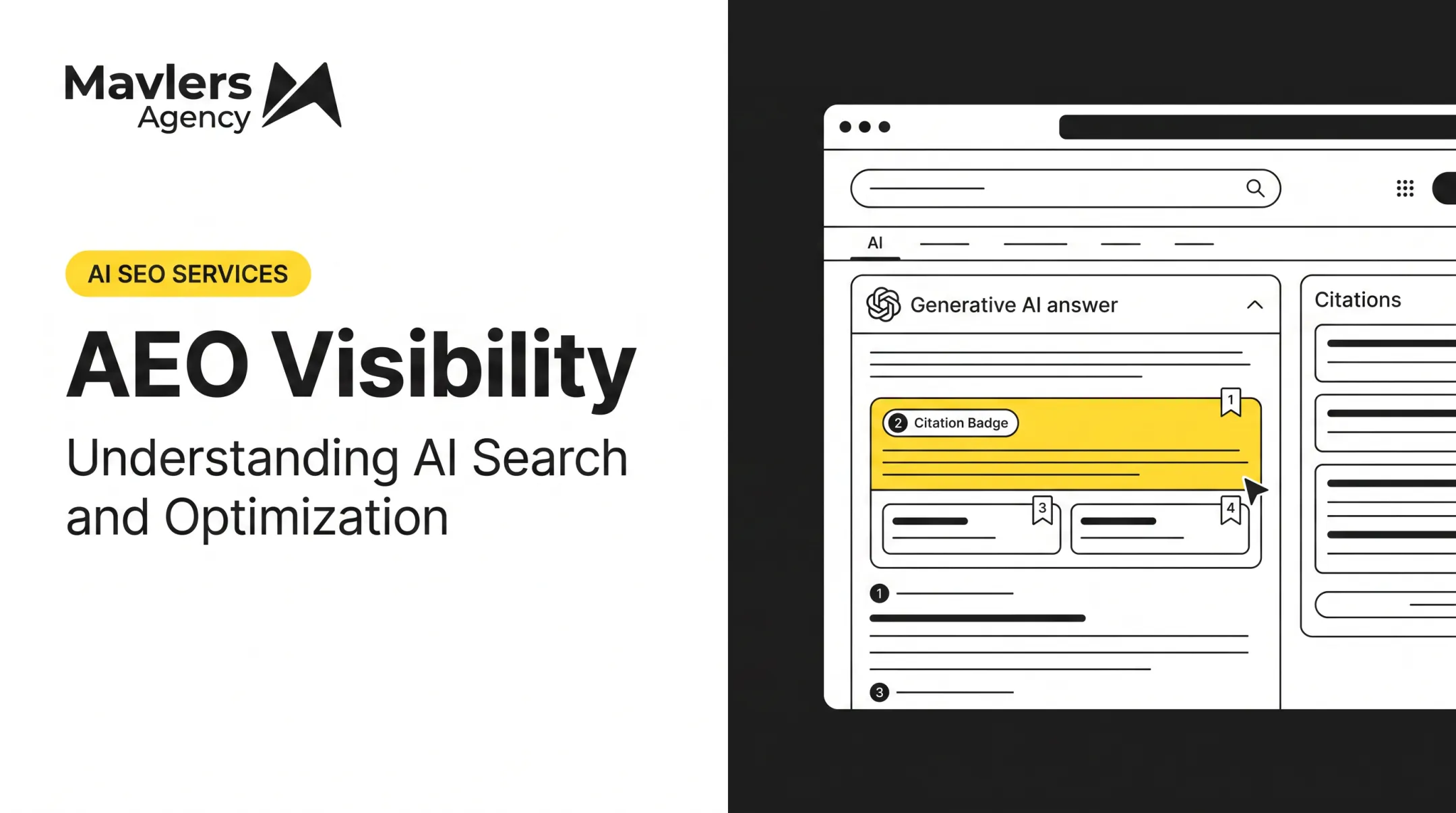
AEO is the practice of structuring and optimizing content so AI-powered answer engines can retrieve, understand, and cite it directly in a generated response. Instead of ranking a page in a results list, the goal shifts to becoming the source an AI system pulls from when answering a user's question.
This marks a real shift from the "10 blue links" model search has run on for decades. Search is increasingly zero-click and answer-first.
The numbers back this up. According to SparkToro's 2026 analysis, 68% of Google searches ended without a click between January and April 2026 — up from 60.45% just two years earlier.
Platforms AEO Targets
AEO isn't just about Google. Marketers need visibility across:
- ChatGPT — OpenAI reports 700M weekly active users
- Perplexity — 780M+ queries in a single month (per its CEO)
- Google Gemini — the Gemini app surpassed 1 billion monthly users
- Google AI Overviews — available in 200+ countries and 40+ languages
- Microsoft Copilot — an AI-powered search and research experience
- Voice assistants — Siri and Alexa, which surface one answer instead of a list

Why AEO Matters for Businesses Today
AI-driven answers change how customers discover, trust, and choose brands. If an AI engine doesn't mention you, a potential customer may never reach your site at all.
Adobe Analytics studied more than 1 trillion visits to US retail sites and found that AI-referred visitors spent 32% longer on-site and viewed 10% more pages than non-AI traffic.
Those same visitors were still 23% less likely to convert immediately. AI-driven traffic skews toward research and consideration, not instant purchase intent.
Use AEO to build awareness and trust earlier in the funnel—as a discovery channel, not a direct-response lever.
AEO vs. SEO: Key Differences
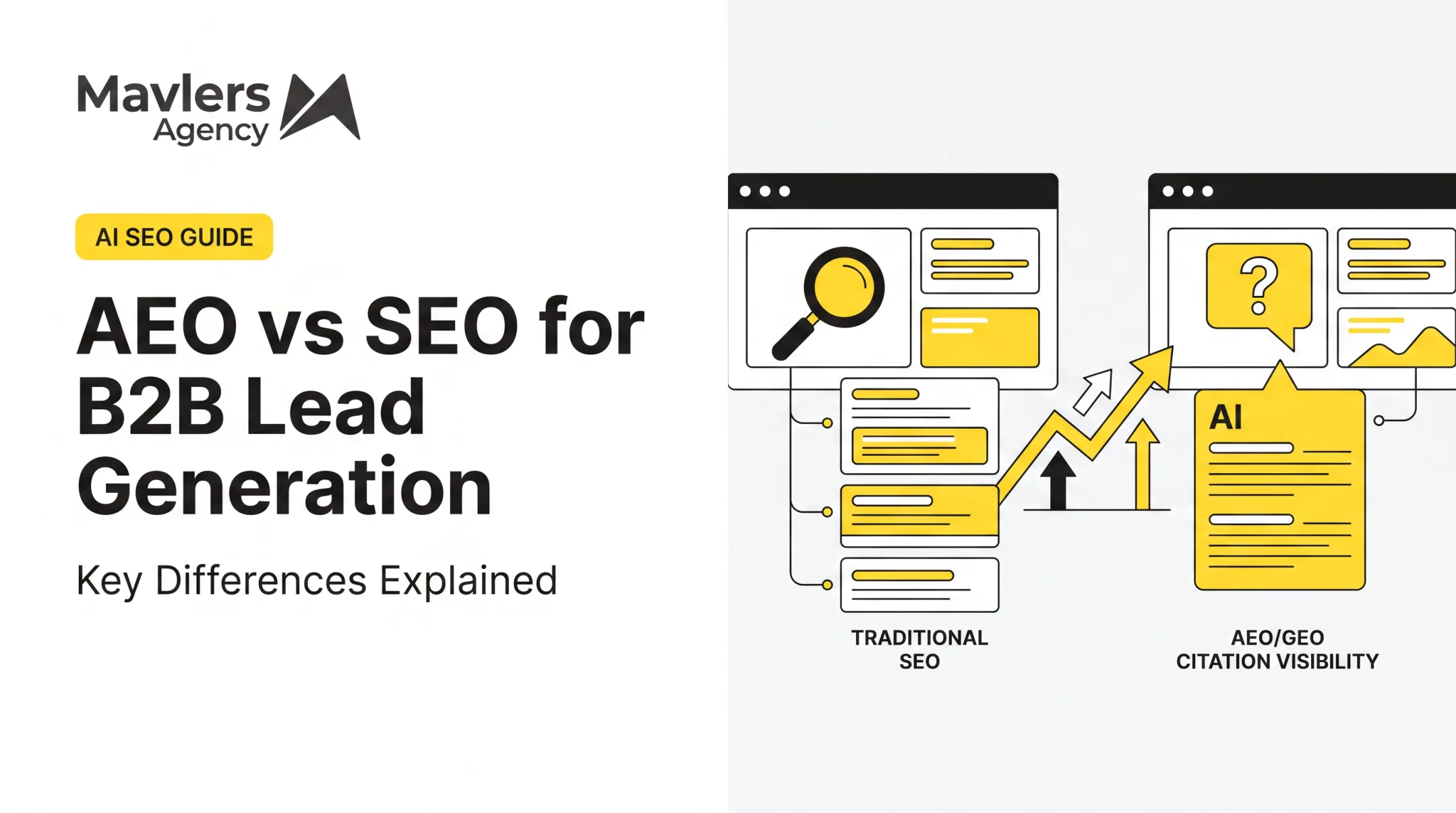
SEO focuses on ranking a page in search results. AEO focuses on getting selected as the direct answer, wherever that answer appears.
| Dimension | SEO | AEO |
|---|---|---|
| Focus | Page ranking and position | Being cited or quoted in an AI-generated answer |
| Content format | Long-form, keyword-optimized pages | Answer-first, question-led, concise passages |
| KPIs | Rankings, clicks, CTR, organic traffic | Mentions, citations, share of voice |
| Platforms | Google, Bing search results | ChatGPT, Perplexity, Gemini, AI Overviews |

AEO doesn't replace SEO — it builds on it. Google's own developer guidance confirms there's no separate eligibility system for AI features. A page still needs to be indexed and technically sound to have any shot at being cited.
The measurement approach does diverge sharply, though:
- SEO tracks rankings, impressions, clicks, and organic conversions over months
- AEO tracks mentions, citations, cited URLs, and answer visibility
AEO shifts can show up in weeks, not months. AI models retrain and refresh sources far more often than Google reshuffles rankings.
Core Strategies to Master Answer Engine Optimization
Structure Content for AI Extraction
AI engines favor content that answers the question immediately—no digging required. Search Engine Land's analysis of 1.2 million AI answers found that 44.2% of citations came from the first 30% of the content. Content phrased as a question was twice as likely to be cited. Practical formatting that works:
- Use H2/H3 headings phrased as actual questions
- Put a direct, self-contained answer in the first 1-2 sentences below each heading
- Build dedicated FAQ sections with concise Q&A pairs
- Add natural-language variations of the same question
Build Topical Authority
Ahrefs analyzed 1.9 million AI citations and found that pages ranking across a topic's related "fan-out" queries were 161% more likely to be cited than pages ranking for just one primary keyword. The takeaway: don't write one article and hope. Build a cluster — a main topic page plus supporting pieces that cover the adjacent questions buyers actually ask.

Implement Schema Markup
Schema doesn't guarantee citation, but it helps AI systems parse content accurately. Focus on:
- FAQPage schema for question-and-answer sections
- HowTo schema for step-by-step instructional content
- Article schema for editorial and blog content
Earn Third-Party Mentions and Citations
AI models weigh brand mentions across the wider web, not just your own site. Build presence through:
- Placements in "best-of" listicles and resource pages
- Guest posts and niche edits on authoritative sites
- Mentions on Reddit, Quora, and review platforms
- Consistent, accurate business data across Google Business Profile and directories
Get the Technical Foundation Right
None of this works on a slow, poorly structured site. Fast load times, clean architecture, and correctly implemented schema are the base everything else in AEO depends on. This is where many agencies hit a wall. Schema, technical fixes, and content structure changes across dozens of client sites eat bandwidth most teams don't have spare. That's why agencies offering AEO often partner with white-label teams like Mavlers Agency for technical SEO, schema, and AI-visibility work at scale—across WordPress, Shopify, Webflow, and HubSpot—without adding headcount or slowing delivery.
Tracking and Overcoming AEO Challenges
Metrics That Actually Matter
Traditional rank tracking doesn't tell you whether an AI engine is citing you. Instead, monitor:
- Visibility — how often your brand appears across AI-generated answers
- Mentions — instances where your brand is named, with or without a citation link
- Citations — instances where your content is directly linked or sourced
- Prompt coverage — the range of question phrasings that surface your brand
AI visibility tracking tools, such as Bing Webmaster Tools' AI Performance report or Ahrefs Brand Radar, can surface this data. Some agencies also build proprietary scoring models. Mavlers Agency's GEO Visibility Index, for instance, rolls mention rate, citation rate, competitive share of voice, and sentiment into one score—so teams aren't stuck comparing manual screenshots.

Common Challenges
AEO isn't a set-and-forget channel. Expect friction:
- Algorithm volatility — AI models update and retrain unpredictably, so visibility can swing week to week
- Hallucination risk — the Tow Center tested eight AI search engines and found they gave incorrect answers to more than 60% of tested queries
- Click-through erosion — Pew Research found traditional links get clicked in just 8% of visits when an AI summary appears, versus 15% without one
That last point matters. Visibility can rise while clicks fall. Report both numbers to clients, not just one.
Consistent monitoring and content refreshes aren't optional. AI visibility shifts fast, and yesterday's cited source can disappear from tomorrow's answer without warning.
White-Label AEO: How Agencies Sell It Under Their Own Brand
Most agencies don't lose AEO deals because they can't sell the strategy. They lose them because they can't staff the delivery. White-labeling closes that gap: a specialist partner builds the work, the agency signs it, presents it, and owns the client relationship end to end.
What a white-label AEO scope usually covers:
- An AI-visibility baseline across ChatGPT, Gemini, Perplexity, and AI Overviews
- Schema implementation (FAQPage, HowTo, Article, Organization) with JSON-LD validation
- Answer-first content restructuring — question headings, self-contained openers, FAQ blocks
- Technical fixes that gate citation eligibility: crawl access, indexation, render, page speed
- Monthly citation, mention, and share-of-voice reporting in the agency's template
How agencies package it. The pattern that works is a fixed-scope audit as the entry point, followed by a monthly retainer covering implementation and reporting. Because the cost is variable rather than salaried headcount, agencies can price on value and protect margin instead of absorbing a specialist hire before the second client signs.
Delivery stays invisible. White-label AEO and GEO partners like Mavlers Agency work under NDA, never contact the end client, and ship every deliverable in the agency's branding — so the agency is the one answering "are we visible in AI search?"
Frequently Asked Questions
Is AEO better than SEO?
No. AEO isn't a replacement for SEO. It addresses AI-driven search surfaces while SEO covers traditional rankings and clicks. The two work together, not in competition.
What is the main goal of AEO?
The goal is getting your content selected as a direct answer or citation by AI systems like ChatGPT, Gemini, or Google AI Overviews. It's about being the source, not just ranking near it.
How do you measure AEO success?
Track visibility, mentions, citations, and share of voice across AI platforms. Pair these with GA4 data on AI-referred engagement and conversions for a full picture.
Does AEO require different content than SEO?
AEO needs more structured, answer-first content: direct answers, question headings, and concise passages. It still relies on solid SEO fundamentals like indexability and quality content.
Can small businesses benefit from AEO?
Yes. Any business publishing content online can improve its AI visibility through better structure, clear answers, and consistent authority signals across the web.