Is your tag container redesign-ready?
Audit every tag, trigger, and variable before launch so tracking doesn't break.



Organization
Industry
Challenge
Stack
Products / Services Used
A high-end lighting manufacturer needed to move away from a fragmented system of static templates and manual updates.
Their goal was a high-performance, public-facing platform that mirrored their Figma design system perfectly. It lets their team manage complex data without developer help. On the surface, the project looked like a standard brochure site. However, the underlying product data was incredibly complex.
Mavlers Agency built a single Craft CMS-powered platform that keeps the front end faithful to the Figma designs while giving the client's team control over day-to-day publishing.

Adaptive Twig template powering every Light Fittings product, interior and exterior
Craft Commerce product types running through one catalogue structure
New front-end templates needed to launch a future product series or capability page


Organization
Industry
Services Used
Lorem ipsum dolor sit amet, consectetur adipiscing elit. Suspendisse varius enim in eros elementum tristique. Duis cursus, mi quis viverra ornare, eros dolor interdum nulla, ut commodo diam libero vitae erat. Aenean faucibus nibh et justo cursus id rutrum lorem imperdiet. Nunc ut sem vitae risus tristique posuere.
Lorem ipsum dolor sit amet, consectetur adipiscing elit. Suspendisse varius enim in eros elementum tristique. Duis cursus, mi quis viverra ornare, eros dolor interdum nulla, ut commodo diam libero vitae erat. Aenean faucibus nibh et justo cursus id rutrum lorem imperdiet. Nunc ut sem vitae risus tristique posuere.
Lorem ipsum dolor sit amet, consectetur adipiscing elit. Suspendisse varius enim in eros elementum tristique. Duis cursus, mi quis viverra ornare, eros dolor interdum nulla, ut commodo diam libero vitae erat. Aenean faucibus nibh et justo cursus id rutrum lorem imperdiet. Nunc ut sem vitae risus tristique posuere.
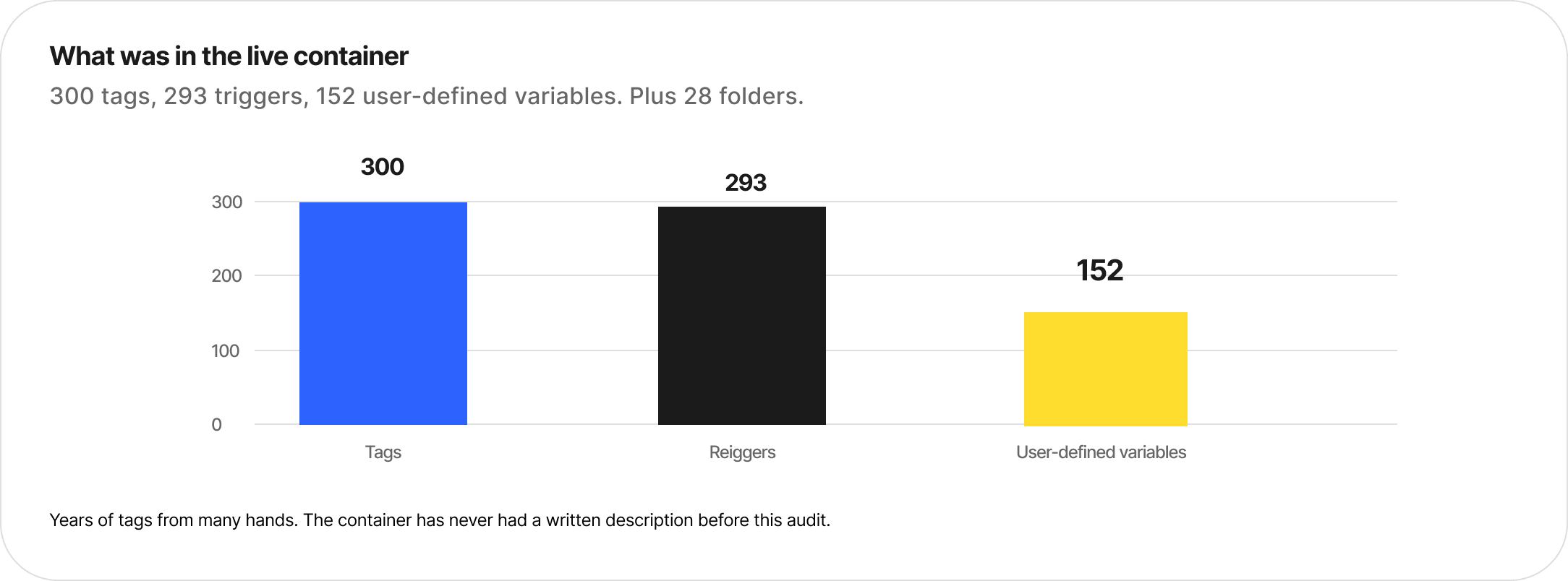
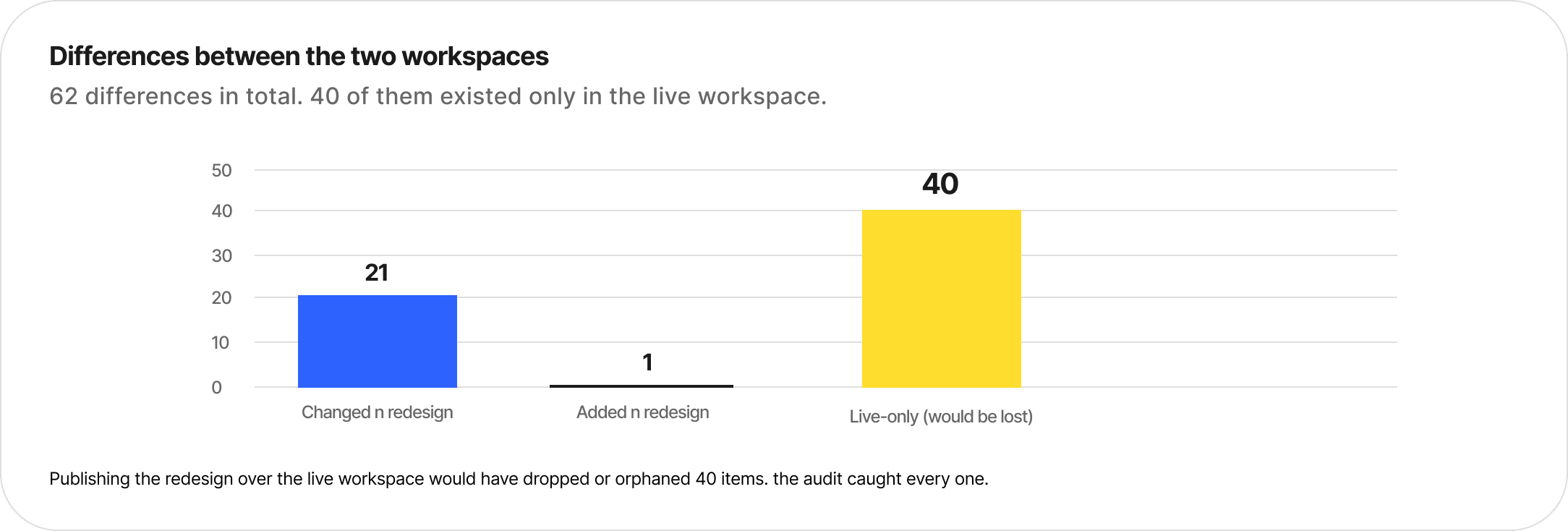
The client is a US national health non-profit, ahead of a website redesign. Their tag manager container had grown for years under many hands: 300 tags, 293 triggers, 152 user-defined variables, 28 folders. The redesign team had been working in a second workspace, and the two had drifted apart. Nobody could say which version of any tag was right or what would stop firing when the redesign published. Before the launch committed anything, the team wanted an audit of what was actually in the container and what the two workspaces disagreed on.

Successful migration of 9,000+ pages across 12+ languages, with no critical downtime.

Multi-channel strategy driving 50%+ monthly registration growth.

Ogilvy needed to scale SEO delivery across multiple markets without expanding headcount. Mavlers Agency stepped in as their invisible production partner.
We'll get back to you within 4 business hours.



See how Mavlers Agency appears across AI search. Each button takes you directly to an AI search for “Mavlers Agency – White Label Digital Agency.”